The Rosary, St. Jude, and Our Dominican Story
Dominicans and those close to us have a special relationship with the devotions observed during the month of October. Many know October as the month of the Rosary, and many also know that it includes the feasts of Sts. Simon and Jude. But there is more to the story—a connection between these two observances that many may not know.

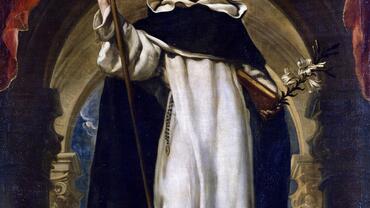
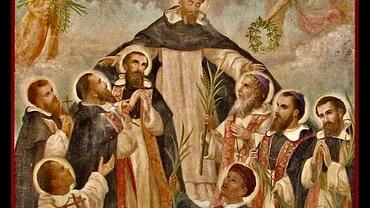
It was not until I joined the Order that I heard the story of the Rosary being given to St. Dominic. During my time in the Order and out of personal interest, I have scrutinized the story and have been impressed to find that this tradition was attested to within the Order in the 1400s, with references pointing back even further. Through the Order’s tireless work over the last several centuries, devotion to the Rosary has grown to the point where it might rightly be said that the Rosary has been a gift of the Order to the Church, helping countless people to think of Mary as Mother. It is precisely here that the plot thickens.
St. Jude is one of the Apostles traditionally called a “Brother of the Lord,” so called because the Gospels use the term adelphoi, which denotes cousinhood. Jude is among those Apostles connected by blood to Jesus’ own family and was therefore treated as a nephew by the Blessed Mother. It is a curious coincidence that one of the Apostles, who would have treated Mary as a family elder before becoming an Apostle, has his feast day during the month that celebrates Mary’s motherhood of us all.
There is a final layer to this story that is relevant to our Province.
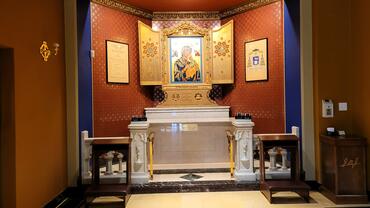
When St. Jude died a martyr’s death, he was buried in the Middle East. By around the eighth century, most of his remains had been moved to Rome, but the people of the place where he had been buried kept a relic of his forearm for centuries afterward. Shortly after the foundation of the Order, an Italian Dominican was made bishop of the diocese that had housed St. Jude’s tomb. Many clergy of the diocese became Dominicans and assumed care of this precious relic. These Dominicans of Armenia suffered persecution at various times through the centuries and moved the relic repeatedly to guard it against destruction, taking it to Smyrna and later to Turin. In the mid-20th century, in the immediate aftermath of World War II, the Dominicans of Turin entrusted this relic to the friars of the Midwest. It rests today at the Dominican Shrine of St. Jude in Chicago.
There is a three-part thread to take away. First, St. Jude enjoyed a close familial relationship with the Holy Family, even in his youth. Second, the Rosary is a means by which we enjoy kinship with Jesus, and our Order has given this means to the whole Church. Third, we in our Province are fortunate to serve as custodians of this story—and to house, at the Dominican Shrine of St. Jude in Chicago, the very relic entrusted to our Order centuries ago.
May God grant you a blessed month of the Rosary and a blessed Feast of St. Jude.
Fr. James Pierce Cavanaugh, OP
Promoter of the Holy Rosary